Understanding the Challenge
Behind every statistic is a child - with rights, strengths, dreams and potential.
Across Nigeria, street-connected children and disadvantaged young people can face overlapping barriers to safety, education, family stability, wellbeing and future opportunity.
Poverty, insecurity, displacement, exclusion from education, exploitation and limited access to support can reinforce one another. The figures below provide national and regional context; they are not numbers of children reached by S2S.
One Question. One Answer. One Reason to Begin.
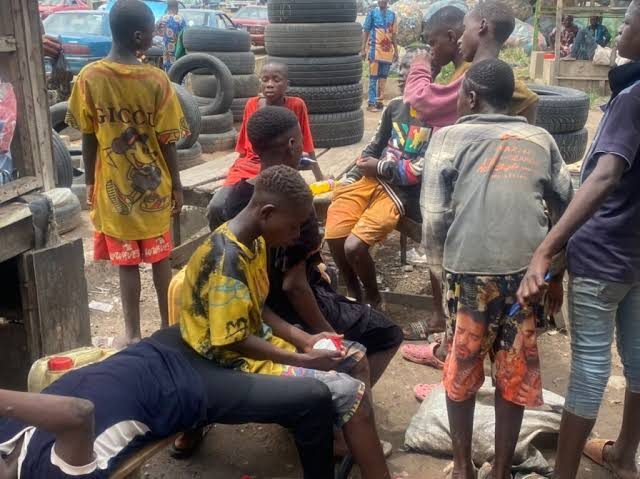
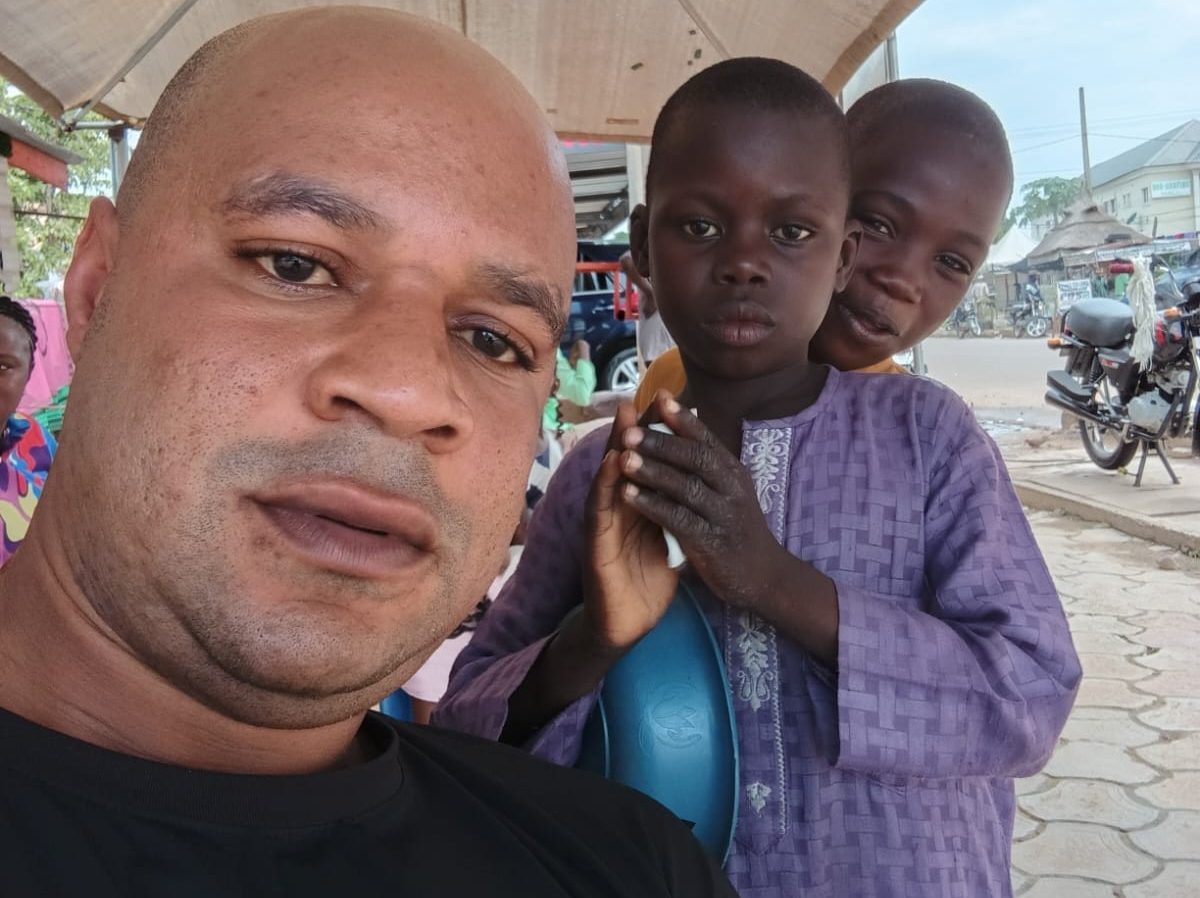
In September 2026, at around 2 pm in Kaduna State, Walter encountered two young boys on the street. They were barefoot, hungry, and begging for enough money to buy their daily meal. One of the children had a visible scar on his leg - a painful reminder that their needs extend beyond food and education to health, safety and protection. Walter stopped and spoke with them. Then he asked a simple question:
"If you were supported, would you like to go back to school?" Their answer was simple: "Yes."
That yes is the reason Street2Scholar exists.
Children were being encountered on Kaduna's streets as far back as 2008. Yet here we are in 2026, and the story remains painfully familiar - and in some cases, worse.
How can we accept that nearly two decades later, children are still growing up on the streets, hungry, barefoot, and out of school?
We know Street2Scholar cannot change this situation overnight. But we can begin. One child. One family. One opportunity at a time.
Our humble beginning in Kaduna State is about creating a pathway from the street, to the scholar's seat and beyond - through family reunification, education, healthcare, protection, skills, and hope.
These children are not statistics. They are children who said YES when asked if they wanted another chance.
Now, it is our turn to say YES to them.
This is why Street2Scholar Foundation is here. This is where we begin.
A story from the field - by Amb. Arewa
He did not bring himself into the world. He did not choose his parents, or the circumstances that would decide whether he ate that day. He was simply summoned to be born - and the world he arrived into was not ready for him.
I first met him on my way to work. About twelve years old, he approached me for alms, the way his peers do - a routine practised out of necessity, not choice. I gave what I could and continued on to the Secretariat, but the thought of him stayed with me all day.
That evening, on my way home, I found him again - asleep at the foot of the bridge, under the full weight of the afternoon sun. There was no shelter, no one watching over him. I wished I could take him off the streets and give him the upbringing every child deserves. Circumstances beyond my control meant I couldn't.
The next morning, I made breakfast to bring him - bread and egg. When I reached the bridge, he was gone. I couldn't wait; work was calling. But on my way home that evening, I found him and handed him the food. I imagine it wasn't a meal he got often. As I turned to leave, another boy from the street walked up to him and began to bully him for it.
"A hungry man is an angry man."
This is the daily reality for street-connected children across Nigeria. They move in groups, pans in hand, asking strangers for food or money - deprived of the basics that should never be in question for any child. Left without support, many are pulled toward violence just to survive. Some are recruited into banditry, not because they chose that path, but because no other path was ever offered to them.
This is one of thousands of stories that led to the founding of Street2Scholar Foundation. Every child we meet at a bridge, a market, or a roadside is a child with the same right to safety, education, and a future as any other - they simply haven't been given the chance yet.
Through our TANOY pillars and Triple-A Pathway, we work to move children like this boy from survival on the street to a seat in the classroom - and beyond.
You can help us reach him, and the thousands like him.
The scale of the challenge
Why children become street-connected
There is rarely one cause. Several pressures can combine within a child’s family, community or wider environment.
- Poverty and housing insecurity;
- Conflict and displacement;
- Disrupted education;
- Family separation;
- Exploitation, violence and neglect;
- Gender and disability-related exclusion;
- Limited access to health, wellbeing and protective services.
What this means for children
When safety, stable care and education are disrupted, children may face increased risks of exploitation, poor learning outcomes, reduced wellbeing and limited future opportunity.
The S2S response
S2S is developing a coordinated, age- and needs-informed approach through the TANOY Model and Triple-A Pathway.
Together, we can help create pathways towards safer care, learning, wellbeing, practical skills and greater independence.
Where S2S is now
S2S is currently developing its programme, safeguarding arrangements, partnerships and monitoring systems ahead of planned pilot activity in Kaduna North. Verified outputs, learning and outcomes will be published as implementation progresses.
Support the next responsible step.